
Path of Exile Mobile in 2026: The Real Status, How to Play on Your Phone Today, and a Complete Beginner’s Guide

If you searched for a Path of Exile mobile beginner guide, a best class breakdown, or a currency guide for your phone, you’ve probably already noticed something strange: half the articles are five years old, and none of them agree on whether the game even exists yet. That’s because most of what’s published about Path of Exile Mobile was written in 2020 or 2021 and never touched again.
Here’s the short version, and then we’ll go deep on everything else you actually came here for. Path of Exile Mobile is not out. It hasn’t quietly launched somewhere you missed. And based on the most recent word from Grinding Gear Games’ own community, on their own forum, it’s effectively on ice while the studio focuses on Path of Exile 2. That’s not a guess — it’s the current, dated status, and nobody else is telling you that plainly.
But that doesn’t mean your phone has to sit this one out. There’s a real way to play Path of Exile on mobile right now, there’s a real beginner’s system to learn (classes, skill tree, currency, leveling, farming, and endgame), and all of it transfers directly whenever GGG does bring a native mobile release out of hibernation. So this guide covers both halves: the honest status update, and the actual, usable knowledge you need — whether you’re playing tonight on your phone through streaming, or getting ready for whatever comes next.
Is Path of Exile Mobile Still Happening in 2026?
Short answer: technically yes, practically no, not any time soon.
Here’s the timeline, because the history actually explains a lot of the confusion:
- 2019 (ExileCon): Grinding Gear Games announced a mobile version of Path of Exile, originally pitched as a port of the base PC game, scaled down for shorter phone sessions with no pay-to-win systems.
- 2021: The studio said the mobile build was in-house development, but never gave a release window. Several fan sites speculated a “2021” or “2022” launch. Neither happened.
- ExileCon 2023: This is the real turning point. GGG showed a new build of the mobile project and revealed they’d quietly pivoted away from porting the original game, and were instead building a distinct experience centered on the Atlas map system, without a full campaign.
- Late 2025 onward: Since that reveal, there’s been essentially no public news. On the official Path of Exile forum in November 2025, a player asked point-blank what happened to the mobile project. The reply from a longtime community member summed up the consensus: it’s effectively shelved, likely to stay that way until Path of Exile 2 is out of Early Access.
That last part matters, because Path of Exile 2 itself is still in Early Access in 2026 — new classes and major endgame systems are still being added patch by patch. GGG has publicly split its attention between running live leagues for the original Path of Exile and continuing PoE2’s Early Access roadmap. A phone spin-off simply isn’t where the studio’s resources are going right now.
So: is it cancelled? Not officially. Is it dead? Not in the sense of a public cancellation announcement. Is it something you’ll be downloading this year? Almost certainly not. Treat every “2026 release date” article you find with suspicion — if it doesn’t mention the 2023 pivot or reference anything from the last twelve months, it’s outdated.
How to Actually Play Path of Exile on Your Phone Right Now

This is the part most “what we know so far” articles skip entirely, and it’s the thing people are actually trying to solve when they search for this. You can’t download a native Path of Exile app, but you can absolutely play the real game — PoE1 or PoE2 — from your phone today. Two approaches work, and they solve slightly different problems.
Cloud gaming services run the game on remote servers and stream the video to your device. You don’t need a powerful phone, just a stable connection.
- GeForce Now — supports both Path of Exile and Path of Exile 2 through linked Steam or Epic Games accounts, including a free tier
- Boosteroid — subscription cloud service, handles PoE2’s newer content without needing to own gaming hardware
- Shadow PC — gives you a full remote Windows machine, so you install Path of Exile yourself exactly like on a desktop, then access it from a browser or app on your phone
Remote desktop / streaming apps are the other route: your own PC keeps running the game at home, and an app mirrors that screen to your phone.
- Parsec and Moonlight are the most commonly used free options among PC gamers generally
- Purpose-built remote-play apps also exist specifically marketed around streaming PoE and PoE2 to iOS and Android
A few honest caveats worth knowing before you try either route:
- Touch controls are genuinely awkward for a game built around precise clicking and dodge-rolling. Pair a Bluetooth controller if you plan to actually fight anything, not just tap around.
- This setup is far more comfortable for low-input tasks than full boss fights: checking your stash, responding to a trade whisper, watching a login queue during a league launch, or keeping an eye on a long crafting session while you’re away from your desk.
- None of this requires you to buy anything extra if you already own a gaming PC — Moonlight and Parsec are free, and GeForce Now has a genuinely usable free tier.
Companion tools you can already use on mobile, separate from streaming the full game:
- The official trade site works fine in a mobile browser, so you can browse listings or message sellers without launching the game at all
- Path of Building, the community’s build-planning tool, has browser-based and companion versions that work on a phone screen for theorycrafting on the go — useful if you want to plan tonight’s build during your commute
- poe.ninja (economy and build data tracking) is also browsable from a phone, handy for checking current orb values before you trade
Path of Exile Beginner’s Guide 2026: Classes, Skill Tree, and Leveling
Everything below applies directly to the PC and console versions of Path of Exile and Path of Exile 2 today — and it’s exactly the knowledge you’ll need on day one if a native mobile release ever does appear, since GGG has said any mobile version would share the same underlying systems.
Choosing Your Class: What Actually Works for Beginners

Path of Exile 2 currently has 8 playable classes in Early Access: Warrior, Sorceress, Witch, Ranger, Monk, Mercenary, Huntress, and Druid. Each is tied to core attributes — Strength, Dexterity, and Intelligence — that shape your starting stats, but none of them lock you out of any skill. Skills come from Skill Gems, not your class, so a Witch can use a physical melee gem if you really want that (though it won’t be efficient).
For a genuinely new player, here’s what actually matters:
- Class choice is the least permanent decision you’ll make. It sets your starting attribute spread and where you begin on the passive tree, not what you’re “allowed” to build.
- Ascendancy choice matters far more, and you unlock it partway through the campaign by completing a Trial. Each class currently offers multiple Ascendancy subclasses, and the current patch’s community tier lists point to Witchhunter and Chronomancer-style casters as strong, forgiving league starters, with slower or more gear-hungry Ascendancies better saved for a second or third character.
- Tier lists shift with every patch. Whatever “best class” article you’re reading, check the date against the current patch number before trusting it. A build that dominated two patches ago can get quietly nerfed into mediocrity.
If you genuinely can’t decide: pick a class built around a playstyle you already enjoy in other action games — melee-and-block if you like tanking hits, spellcaster if you like managing cooldowns and positioning from range, minion or totem-based if you’d rather manage a small army than dodge-roll everything yourself.
Skill Tree Guide: The Passive System Without the Panic

The passive skill tree is the single most intimidating thing new players run into, and it’s also the thing most beginner guides explain badly. Here’s what you actually need to know:
- You earn passive points by leveling up and completing certain quests. Each point buys a small node on a massive shared tree, and your class determines your starting location on that tree.
- Respeccing is far less scary in Path of Exile 2 than in the original game. PoE2 lets you respec passive points using in-game gold, which is a much more forgiving system than PoE1’s old scarcity-based Orb of Regret model. You can course-correct a bad allocation without needing a rare currency drop.
- Follow the natural flow of your class’s starting attributes early on rather than reaching across the tree for unrelated stats — it’s more efficient, and it’s fine to adjust later once you understand what your build actually needs.
- Big “keystone” passives further out on the tree can completely change how your character plays, but they’re advanced tools. Don’t chase them on your first character.
Leveling Guide: Getting Through the Campaign Without Burning Out
The campaign is long, and Path of Exile 2 in particular is noticeably slower-paced and more punishing than most modern action RPGs, even for players who’ve put serious hours into the original game. A few things that genuinely help:
- Expect a real difficulty curve. Mobs hit harder and require actual positioning and dodge-rolling; standing still and tanking a crowd is a fast way to die repeatedly in the early acts.
- A shield on your off-hand is a surprisingly strong defensive option even on classes you wouldn’t normally think of as “tanky.”
- Don’t rush past side content that gives passive points or useful early gear — the campaign isn’t a race the first time through.
- Following a structured build guide for your first character removes a huge amount of decision fatigue and lets you actually learn the game’s systems instead of fighting your own build choices the whole way.
Path of Exile Currency Guide 2026: How the Economy Actually Works
This is the section where players coming from other games — or from the original Path of Exile — get tripped up the most, because Path of Exile 2 changed the currency system significantly.
There’s no gold-as-universal-money system between players. Gold exists, but it’s mainly used for NPC interactions and passive respecs, not for buying gear from other players. Trading between players runs entirely on orbs, which double as both currency and crafting tools. That dual purpose is what makes the system confusing at first: the same item you’d spend to buy a weapon from another player is also something you could use to modify your own gear.
The core orbs you’ll actually deal with as a newer player:
- Exalted Orbs are now the base trading unit in Path of Exile 2, replacing the role Chaos Orbs held in the original game. If you’re coming from PoE1 and pricing everything in Chaos out of habit, you’ll misjudge trades.
- Chaos Orbs still exist but work differently now — instead of rerolling every modifier on a rare item, they remove one random modifier and add one new one, a more surgical (and less catastrophic) version of the old mechanic.
- Divine Orbs reroll the numeric values of a modifier you already have, without changing what the modifier is. These are the high-end currency for serious gear refinement.
- Regal Orbs upgrade a Magic item to Rare, adding an extra modifier slot in the process.
- Vaal Orbs, Essences, and Omens are more specialized crafting tools layered on top of the basic system, letting you target specific outcomes instead of relying purely on chance.
- Several classic Path of Exile 1 currency items — Orbs of Fusing, Chromatic Orbs, Jeweller’s Orbs — no longer exist in Path of Exile 2, because sockets now auto-link and start uncolored. If an older guide still mentions “6-linking” or chromatic rolling as a core money sink, it’s describing the first game, not the current one.
Practical advice for a beginner, without turning this into a full crafting course:
- Don’t dump your Chaos Orbs the moment you get them thinking they’re the top currency — that habit is a holdover from the original game and will cost you value in PoE2.
- Hold onto Exalted Orbs early rather than spending them on low-value items; they’re your actual bulk trading currency now.
- Check a live price tracker like poe.ninja before trading anything you’re unsure about — orb values swing meaningfully within a single league, sometimes week to week.
- Treat currency spending as a decision, not a reflex: a good crafting choice fixes a specific, real problem with an item (missing resistance, low life, a bad weapon roll), not just “I have orbs so I should use them.”
Farming Guide Basics: Where Currency and Loot Actually Come From
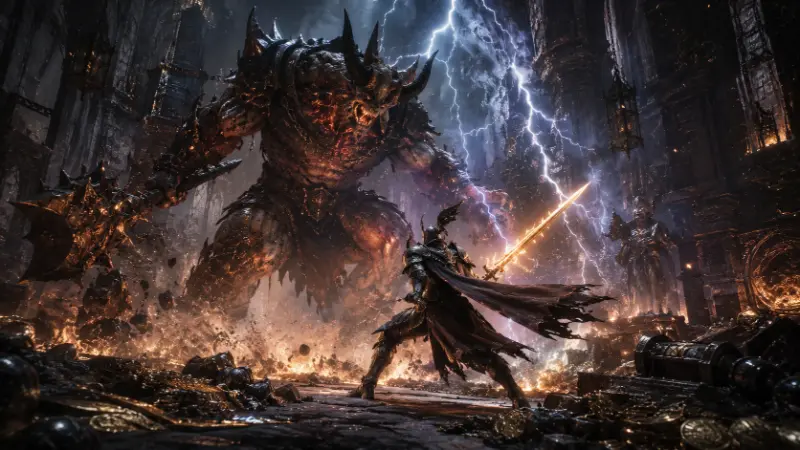
Once you’re past the campaign, farming becomes your main loop, and it’s worth understanding the shape of it even as a newcomer:
- Maps are the primary endgame farming activity — instanced areas you find, apply currency to modify (raising difficulty and reward), and clear for loot and progression materials.
- A loot filter isn’t optional once you hit the midgame. Without one, you’ll spend more time identifying and vendoring junk than actually playing, and you’ll miss valuable drops buried in visual clutter.
- Efficient farming is about clear speed and consistency more than any single lucky drop — a fast, reliable build that completes more maps per hour will usually out-earn a slower “high roll” build chasing rare jackpot drops.
- Specific farming strategies (particular map types, boss rotations, league-mechanic loops) change every single patch as GGG rebalances rewards, so treat any farming route you read about as current only for the patch it was written for.
Endgame Guide Overview: What Happens After the Campaign
The endgame in Path of Exile 2 is built around the Atlas, a connected web of map nodes you unlock and progress through after finishing the campaign. Recent updates have significantly expanded this system, adding hundreds of new Atlas nodes, additional map area types, and a more structured endgame questline that gives newer players clearer direction instead of just an open, directionless grid of maps.
For a beginner, the realistic goal isn’t to master the endgame immediately — it’s to understand the loop: finish the campaign, start clearing maps, use currency to push into harder map tiers as your gear improves, and gradually specialize into farming the specific content (bosses, league mechanics, crafting) that matches what you actually enjoy.
Common Pain Points New Players Hit (And How to Avoid Them)
Pulled directly from years of new-player questions across the community — these are the recurring friction points, not hypothetical ones:
- Trading feels opaque at first. You’re not missing an obvious button; the trade site and in-game whisper system genuinely have a learning curve. Budget an hour to just practice searching and messaging before you assume you’re doing it wrong.
- Resistances sneak up on you. Elemental resistance caps become critical in the midgame, and players who ignored them in the early campaign often hit a wall where they die repeatedly for no obvious reason. Check your resistance screen once you leave the early acts.
- Hoarding everything clogs your inventory and stash. Not every rare item or shard is worth keeping. Learn what your build actually needs and vendor or sell the rest.
- The difficulty spike catches veterans off guard too, especially moving from the original game into Path of Exile 2’s slower, more deliberate combat. This isn’t a sign you’re playing wrong — it’s a genuinely different pace, and adjusting your habits (more dodging, less standing and tanking) fixes most early frustration.
- Passive point regret is common but fixable. Especially in Path of Exile 2, where gold-based respecs mean a suboptimal early allocation isn’t a permanent mistake.
Frequently Asked Questions
What happened to Path of Exile Mobile?
It was announced in 2019 as a planned port of the original game, then pivoted at ExileCon 2023 into a separate Atlas-focused experience without a full campaign. As of the most recent community discussion on the official forum in late 2025, there’s been no further public update, and the general consensus is that it’s on hold until Path of Exile 2 exits Early Access.
Can I play Path of Exile on mobile right now?
Not as a native app, but yes, functionally — through cloud gaming services like GeForce Now, Boosteroid, or Shadow PC, or by streaming your own PC’s game session to your phone with a remote desktop app. Trading, build planning, and price checking can also be done directly through a mobile browser without needing the full game running.
Is Path of Exile too grindy for a casual player?
It’s grind-heavy by design, but it’s playable casually if you set your own pace. You can play entirely solo, skip the more intense trading and min-maxing side of the game, and still finish the campaign and enjoy early maps without treating it like a second job. The parts that feel overwhelming — deep crafting, high-tier map pushing — are genuinely optional.
What is the best or strongest class in Path of Exile 2?
There isn’t one universal answer, because balance shifts every patch. What’s stable advice is picking based on playstyle rather than a tier list screenshot: melee-and-block classes are more forgiving for absorbing mistakes, ranged spellcasters reward careful positioning, and minion or totem builds suit players who’d rather manage a team than dodge everything personally. Check the patch number on any tier list before trusting it.
Is Path of Exile 2 good for beginners, or should I start with the original?
Path of Exile 2 is the more approachable entry point structurally — sockets are simpler, respecs are cheaper, and the campaign is more guided. That said, its combat is genuinely harder moment-to-moment than the original game’s. If you want a gentler combat curve, the original Path of Exile is still fully active and beginner-friendly; if you want cleaner modern systems and don’t mind a tougher fight, start with Path of Exile 2.
How does currency work in Path of Exile 2?
Orbs function as both money and crafting tools — there’s no separate universal currency for player trading. Exalted Orbs are the current base trading unit, Chaos Orbs perform a targeted reroll rather than a full one, and Divine Orbs adjust numeric values on existing modifiers. Several currency types from the original game, like Fusing and Chromatic Orbs, don’t exist anymore because the socket-linking system they supported was removed.
Related: best offline RPG games, best multiplayer mobile games